Geocoding tuned for underwriting risk.
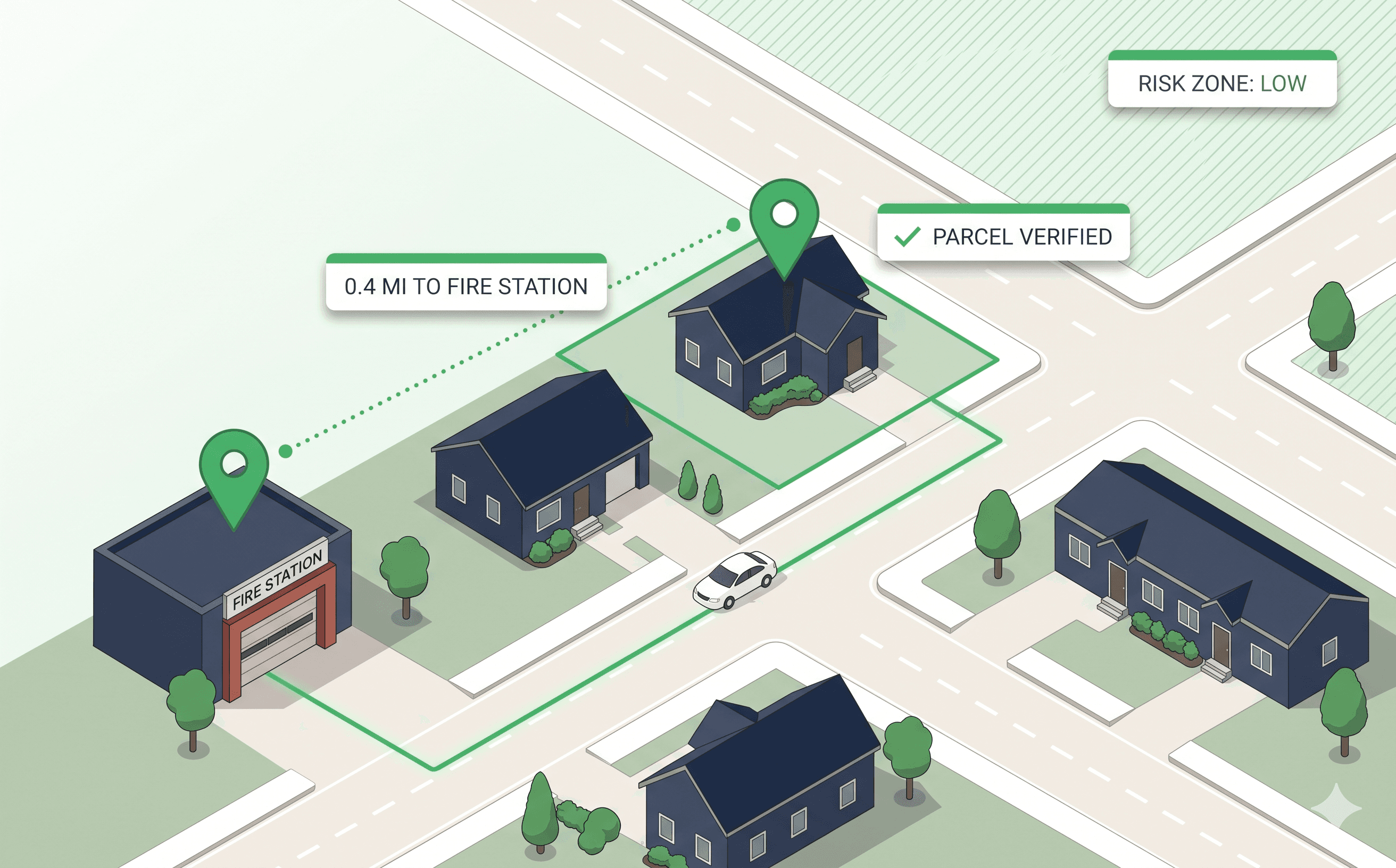
Parcel-level address geocoding with the precision underwriting depends on, including distance-to-coast, distance-to-fire-station, and other rating-relevant geography.
Property risk geocoding, drive-time territory analysis, multi-stop claims routing, and agent locators , built for the way carriers and InsurTechs actually run.
Trusted by carriers, InsurTechs, and brokerages across North America.








Parcel-level address geocoding with the precision underwriting depends on, including distance-to-coast, distance-to-fire-station, and other rating-relevant geography.
Multi-stop routing for claims adjusters, mobile inspectors, and catastrophe-response teams, built to surge when a storm changes the day's geography.
Drive-time isochrones for adjuster network coverage, agent territory design, and service-level reporting, grounded in real road-network data, not radius rings.
Custom-styled basemaps and branded markers, for agent finders, in-network body shop locators, and partner directories that match your brand.
Underwriting geocoding across millions of policies, claims-event surges that triple traffic in hours, and field-team routing across thousands of adjusters, per-call pricing breaks the math. Our model is built for the volumes carriers and InsurTechs actually generate.
Insurance doesn't get a second pass at risk geography, pricing, eligibility, and CAT exposure are gated on it. Geocoding tuned for parcel-level precision, with the rating-relevant overlays underwriting actually runs against.
Insurance teams get dedicated technical support and account management. When a hurricane lands and adjuster routing has to surge overnight, there's a human on the other end.
Risk geography is rating geography.
Distance to coast, distance to fire station, parcel boundaries, hail and wind exposure, the geographic variables underwriting prices on are only as good as the geocode they sit on. The carriers we work with that fix geocoding precision at intake price more accurately and dispute fewer claims downstream.
Catastrophe response is a routing problem before it's a staffing problem.
After a storm, the constraint isn't usually adjuster headcount, it's getting the right adjusters to the right addresses on the right day, while roads are out and conditions change hourly. The carriers that re-route in near-real-time recover their book faster than the ones that hold the morning plan.
Territories drawn on zip codes don't price what you ship.
Underwriting territories and adjuster networks built on zip-code boundaries can hide both pricing leaks and service gaps. The teams that move to drive-time and parcel-level overlays grounded in real road data find both, usually before the audit, the broker, or the regulator does.
Want the deeper technical view? Read our insurance routing and risk-geography guide →
Insurance workloads, underwriting geocoding across the policy book, claims-event surges, field-adjuster routing, agent locators, break per-call pricing fast at scale. Our model is volume-based, designed for the call patterns carriers and InsurTechs actually generate. Talk to sales for a per-policy or per-claim TCO comparison against your current provider.
Our geocoder supports parcel-level precision in many markets, and our APIs return distance-to-feature metrics, including distance to coast, hydrography, and other reference layers, for use in rating models. Coverage and freshness vary by region; talk to sales for a market-by-market detail.
REST-first APIs that drop into the major policy administration, claims, and rating engines used in the industry. Most carriers go live inside their existing system rather than running a separate geocoding or routing portal.
Yes. Routing, geocoding, and tile infrastructure are built for surge events, including post-storm adjuster routing, traffic spikes from claims-portal logins, and catastrophe-response coordination. Talk to sales for surge-capacity planning ahead of named-storm season or other anticipated events.