Geocoding at programmatic scale.
High-throughput geocoding and reverse-geocoding for batch enrichment, real-time bidding, and audience segmentation, built for the call volumes ad-tech and data platforms actually generate.
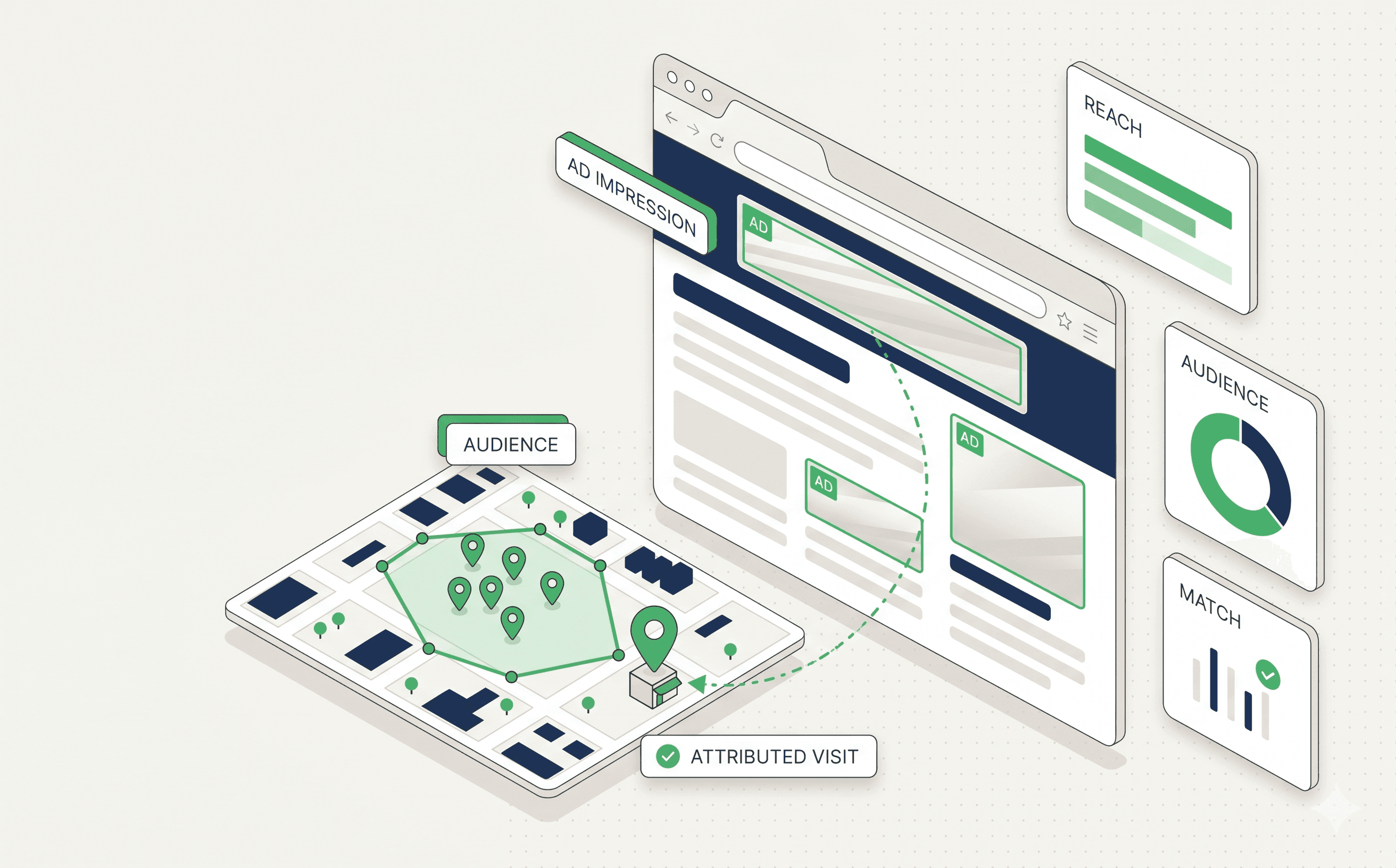
Batch and real-time geocoding, polygon and boundary targeting, drive-time trade-area attribution, and POI data, built for the call volumes ad-tech and data platforms actually run.
Trusted by ad-tech, measurement, and data platforms across the world.








High-throughput geocoding and reverse-geocoding for batch enrichment, real-time bidding, and audience segmentation, built for the call volumes ad-tech and data platforms actually generate.
Custom polygon definition, ZIP+4, DMA, and neighborhood boundaries, usable directly inside targeting, audience, and compliance workflows.
Drive-time isochrones and proximity logic for OOH attribution, store-visit analysis, and exposure-to-visit measurement, grounded in real road-network data.
Point-of-interest coverage with the categories, attributes, and freshness measurement and attribution platforms actually need.
Programmatic bidding, batch enrichment, and audience segmentation don't run a few API calls, they run billions across exchanges, pipelines, and dashboards. Per-call pricing breaks the math at programmatic scale. Our pricing is built for it.
Reverse geocoding, polygon math, boundary lookups, and matrix operations, the spatial primitives an ad-tech or data team actually runs against, available as first-class APIs without consumer-app overhead.
Media, advertising, and data teams get dedicated technical support and account management. When a batch run fails at 2am or a campaign-launch QA breaks, there's a human on the other end.
Per-call pricing dies at programmatic scale.
Geocoding inside an RTB bid path or a batch enrichment pipeline doesn't run thousands of calls, it runs billions. The platforms we work with that rebuilt their geocoding bills at programmatic scale found the wedge in cost-per-million, not in latency or coverage.
Boundary precision is targeting precision.
Audiences targeted on rough boundaries, a ZIP code instead of ZIP+4, a city instead of a neighborhood, waste impressions and miss the people the campaign was designed for. The data teams that move to higher-precision boundary data place ads where the audience actually is.
Attribution is a routing problem, not just a proximity problem.
Visit attribution built on straight-line distance counts impressions that didn't realistically drive a store visit. Attribution grounded in drive-time isochrones and real road-network reach sees the actual cause-and-effect, and produces lift numbers that survive a re-audit.
Want the deeper technical view? Read our ad-tech and data-platform guide →
Programmatic ad-tech and large-scale data workloads, RTB-path geocoding, batch enrichment pipelines, dashboard reverse-geocoding, break per-call pricing fast. Our model is volume-based, designed for the call patterns ad-tech and data platforms actually run. Talk to sales for a per-billion or per-pipeline TCO comparison against your current provider.
Yes. Bulk geocoding, streaming endpoints, and pipeline-friendly response formats are available. Most data and ad-tech customers run our APIs inside Spark, dbt, Snowflake, or similar data infrastructure rather than calling per-row from application code.
Yes. ZIP+4, DMA, neighborhood boundaries, and custom polygon support, usable directly in targeting, audience-build, and attribution workflows. Coverage and freshness vary by region; talk to sales for a market-by-market detail.
REST-first APIs that drop into the major DSP, DMP, CDP, and attribution platforms used in ad-tech and measurement. Most customers run our endpoints inside their existing data and bidding infrastructure rather than adopting a separate portal.