When bridge, weight, and hazmat rules apply on the lane you booked
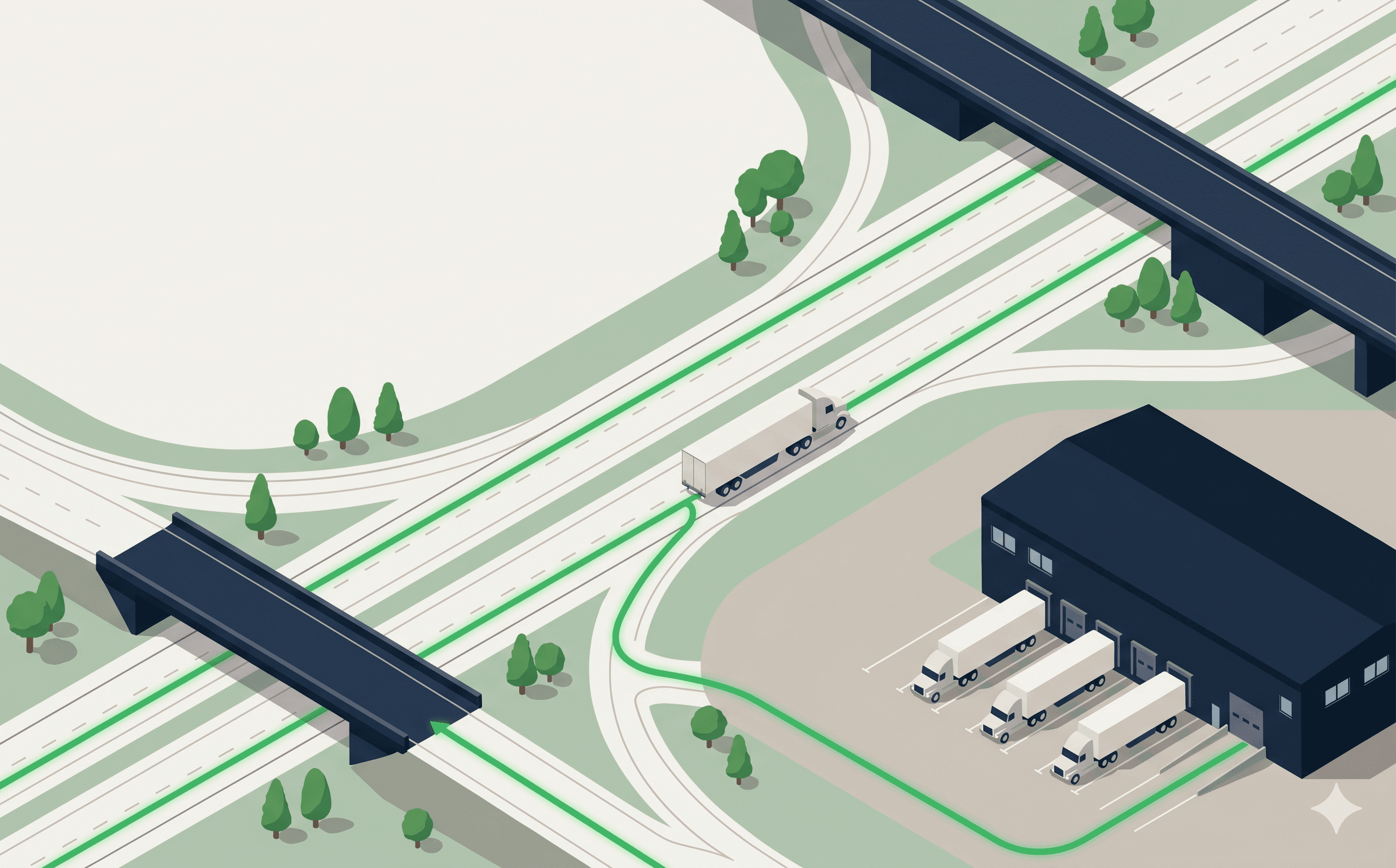
Truck attributes need to stay on the run from tender to delivery, not stripped off the first time someone re-sequences stops.
Truck-attribute routing, HOS-aware ETAs, and dock-door-precise geocoding, built for the realities of moving freight at carrier and 3PL volume.
Trusted by carriers and 3PLs across North America.








Truck attributes need to stay on the run from tender to delivery, not stripped off the first time someone re-sequences stops.
Traffic and HOS should fold into the ETA your broker sees before the receiver starts calling the yard about a late door.
Distribution centers need yard and door context in the geocode, not a pin in the parking lot that looks fine on a map tile.
Load builders and operations should pull distance and drive time from one routing surface so bids, pay, and customer windows line up.
Per-call maps pricing turns every matrix refresh into a finance conversation. We price for the route, geocode, and tile volume you actually run so planners can re-cut loads without opening a ticket to procurement.
The lane that looked good in the bid needs to match the corridor the driver can run, height, weight, hazmat, and equipment profile carried through, not re-entered at dispatch.
Enterprise carriers and 3PLs get named technical support and account coverage. When something breaks at shift open, there is a person who knows your TMS handoff, not a generic queue.
Contracts are built around the route, geocode, and tile volume you actually run, not a long tail of metered SKUs on every screen load. We walk pricing with your ops and finance leads against your lane pattern and batching cadence so re-runs on truck profiles are not a budget line item.
Targets for availability, support response, and escalation are set in the enterprise agreement, not on a marketing landing page. If we miss a committed window, remedies are spelled out there (typically credits plus a written recovery plan). Exact numbers are reviewed line-by-line before signature.
Your TMS stays the system of record for orders, equipment, and dispatch workflow; telematics keeps HOS and positions. MapQuest supplies truck-aware directions, distance and matrix APIs, geocoding, and map tiles over REST, wired where loads are built or where planners review miles and ETAs. Pairings with McLeod, Trimble, TMW, and common ELD feeds are typical: stops and equipment in, routes and polylines out.
Expect a proof-of-concept in your sandbox in about a week once keys and sample loads are in place. Hardening for auth, caching, rate limits, and cutover is usually four to eight weeks depending on how many environments you run and who owns QA.