Branded maps without the per-tile bill.
Custom-styled basemaps, vector tiles, and embed-anywhere map components, at volume pricing that doesn't penalize a million-page listing site.
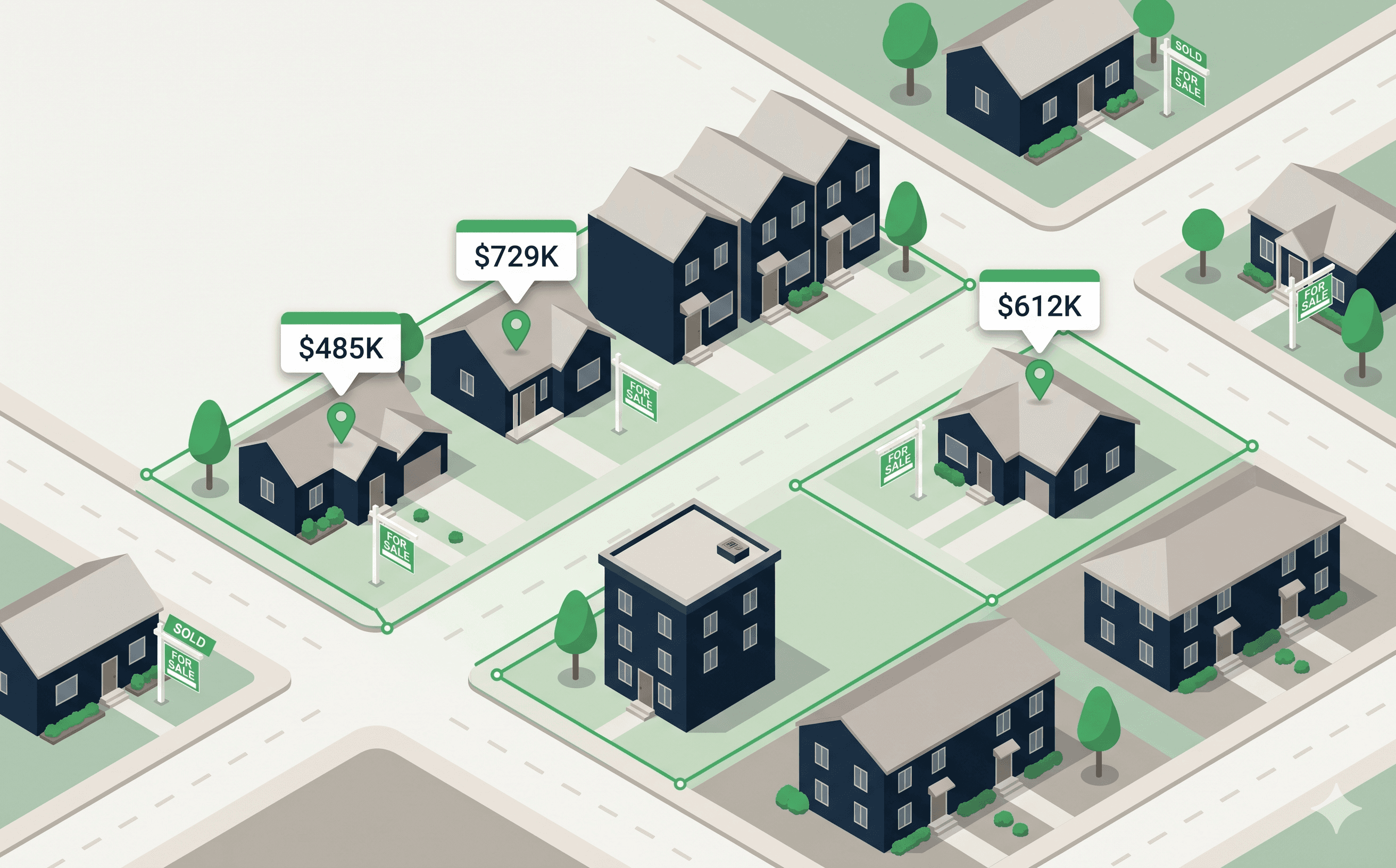
Listing search at scale, polygon and neighborhood draw, drive-time commute filters, and address-precise geocoding, built for the call volumes real estate sites actually serve.
Trusted by real estate and PropTech platforms across North America.








Custom-styled basemaps, vector tiles, and embed-anywhere map components, at volume pricing that doesn't penalize a million-page listing site.
Apartment numbers, new-construction lots, gated communities, and rural addresses, with the residential precision listing pages depend on.
Lasso-draw search, named-neighborhood polygons, and school-district boundaries, for the spatial filters home buyers actually use.
Drive-time isochrones for 'homes within X minutes of work', built on real road-network data that reflects how the commute actually runs.
Listing search and map embeds don't run a few API calls per session, they run hundreds, across millions of monthly users. Per-tile and per-call pricing breaks the unit economics. Our pricing is built for portal-scale traffic.
Polygon search, named-neighborhood boundaries, school-district overlays, commute filters, the spatial primitives a real estate site lives on, available as first-class APIs.
Real estate teams get dedicated technical support and account management. When a tile-rendering issue surfaces during a Sunday open-house traffic spike, there's a human on the other end.
Per-tile pricing kills listing-page economics.
Real estate sites we work with that rebuilt their tile and geocoding bills got the biggest gains not from a faster map, but from a map that didn't penalize traffic. The cost-per-session math is the wedge, everything else is icing.
New construction is its own geocoding problem.
Pre-listed homes, lot-only addresses, and freshly recorded subdivisions don't show up cleanly in consumer geocoders. The platforms that fix this on intake, when the listing is created, see the smoothest map experience downstream.
Buyers don't search by radius. They search by commute.
Distance-from-work filters built on straight-line radii return the wrong houses. The sites that move to drive-time isochrones built on the real road network keep buyers in the funnel longer and surface listings the radius would have hidden.
Want the deeper technical view? Read our maps-at-platform-scale guide →
Real estate platforms hit per-tile and per-call pricing walls fast, especially after recent Google Maps Platform price changes. Our model is volume-based, designed for the call patterns portals actually run. Talk to sales for a per-thousand-session TCO comparison against your current bill.
Yes. Custom basemap styling, vector tile layers, and brand-controlled color palettes are first-class. Most real estate customers ship a fully branded map experience without giving up performance.
Yes. Named neighborhood polygons, school-district boundaries, ZIP-code geometries, and custom polygon support, usable directly in your search UI. Coverage and freshness vary by region; talk to sales for a market-by-market detail.
API keys same day. Most real estate teams have map tiles and geocoding running against a staging environment within two weeks, with production traffic in four to six.